
Why Does Back Pain Keep Coming Back?
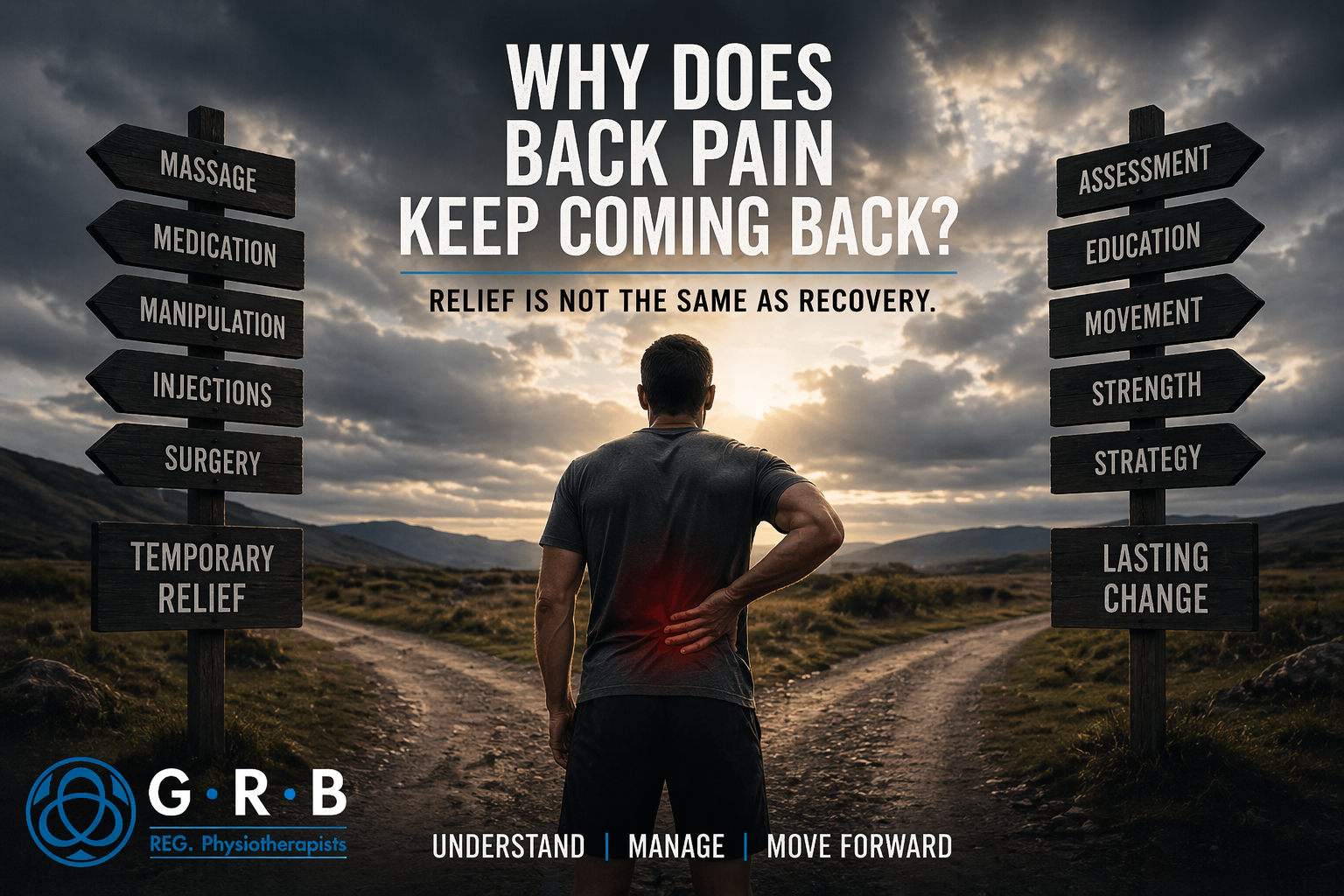
Back pain is one of the most common reasons people seek treatment.
And for many, it improves…
only to return weeks, months, or even years later.
So the question is:
Why does back pain keep coming back?
Back Pain Is a Symptom — Not a Diagnosis
Many people arrive at a clinic saying:
“I’ve got back pain.”
And of course, they do.
But imagine telling a doctor:
“I have chest pain.”
Would that be the final diagnosis?
Of course not.
Chest pain is a symptom.
So is back pain.
The real question is:
What is causing it?
What Do Most People Expect From Treatment?
How often have you walked into a physiotherapist's or chiropractor’s rooms expecting:
- a massage
- to be “clicked”
- some quick relief
And how often have you expected:
- a thorough assessment
- a clear diagnosis (or working diagnosis)
- an explanation
- a strategy to move forward
There’s nothing wrong with hands-on treatment.
But if that is all you receive, you may only be addressing the symptom, not the cause.
Relief Is Not the Same as Recovery
Most treatments aim to reduce pain.
And that matters.
Massage, manipulation, medication, and even surgery can all play a role in managing symptoms.
But here’s the key:
Relief is not the same as recovery.
If treatment focuses only on reducing pain, without addressing why the pain developed in the first place, the same cycle can continue.
Why Back Pain Often Returns
Research shows that many people who experience back pain will go on to have future episodes.
Not because their back is “damaged”,
but because the underlying contributors were never fully addressed.
These may include:
- Reduced strength and endurance
- Poor load tolerance (the ability to handle daily demands)
- Movement habits and patterns
- Sustained loading on the spine (prolonged sitting or postures)
- Lifestyle factors (sleep, stress, activity levels)
- Loss of confidence with movement
- Reduced mobility where it is needed
If these factors are not addressed,
The same stresses that caused the pain in the first place remain…
—and the cycle often repeats.
What You Should Expect From Good Care
You deserve more than temporary relief.
You should expect:
- A thorough history
- A physical examination
- A clear explanation
- A diagnosis or working diagnosis
- A structured plan
- Progression over time
Not just:
“Lie down, and we’ll see.”
Treatment Should Have a Purpose
Every treatment should answer:
Why are we doing this?
Hands-on therapy can be useful.
But it should support a bigger goal:
- improving movement
- increasing load tolerance
- restoring confidence
- helping you return to activity
The Missing Piece: Understanding and Self-Management
The most important part of recovery often happens outside the treatment room.
You should leave your session understanding:
- What is contributing to your pain
- What to do when it flares up
- How to move with confidence
- How to build resilience
- How to prevent recurrence
Because if you are not taught how to manage your back pain…
You remain dependent on treatment.
Breaking the Cycle
Back pain does not have to be a recurring story.
With the right approach, you can:
- Understand your condition
- Reduce flare-ups
- Improve function
- Return to activity
- Build long-term confidence
The Take-Home Message
Back pain is common.
Recurring back pain is also common.
But it is not inevitable.
If your treatment has only ever focused on relief, it may be time to ask a different question:
What is actually causing my pain?
Let’s Help You Find Answers
At GRB Physio, we don’t just treat symptoms.
We help you understand your pain, manage it effectively, and move forward with confidence.
012 664 6128
www.grbphysio.com
GRB Physio – Move well. Live well.